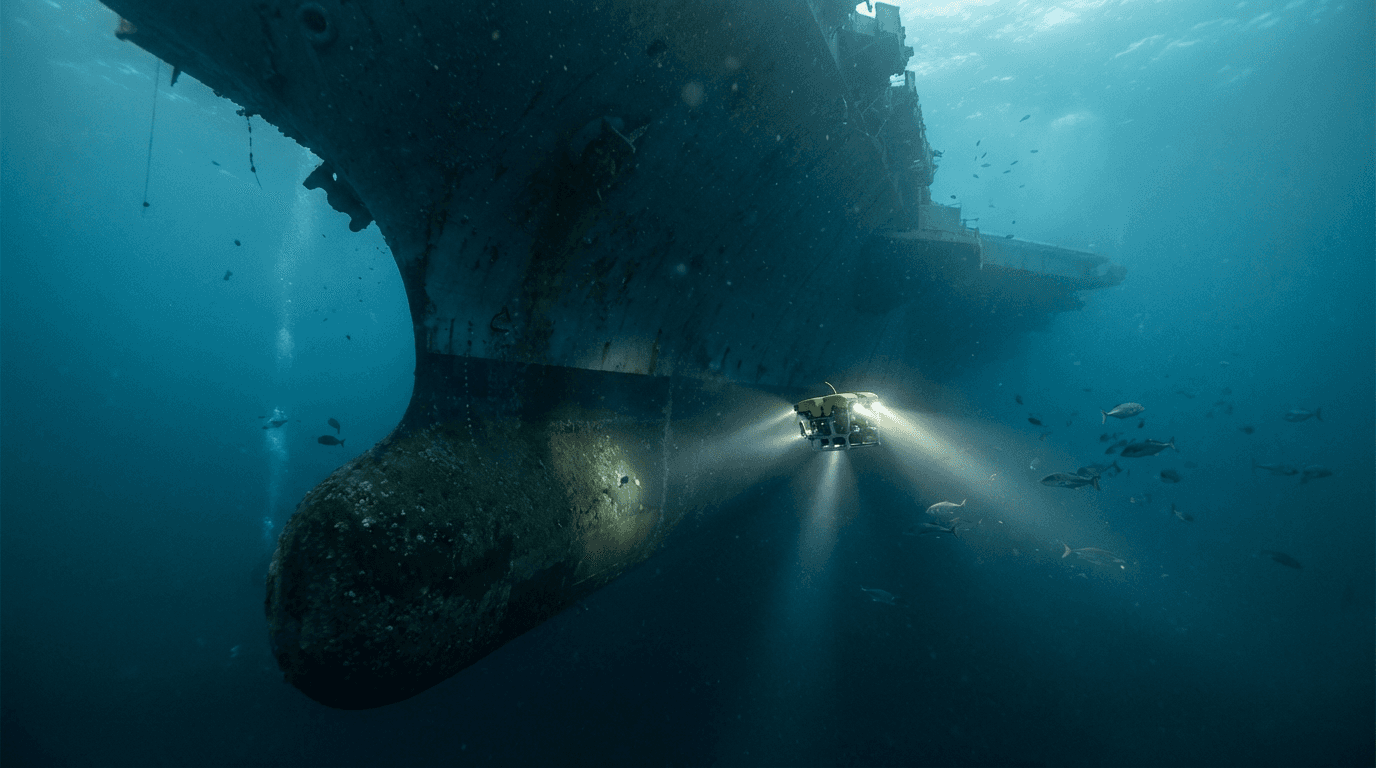
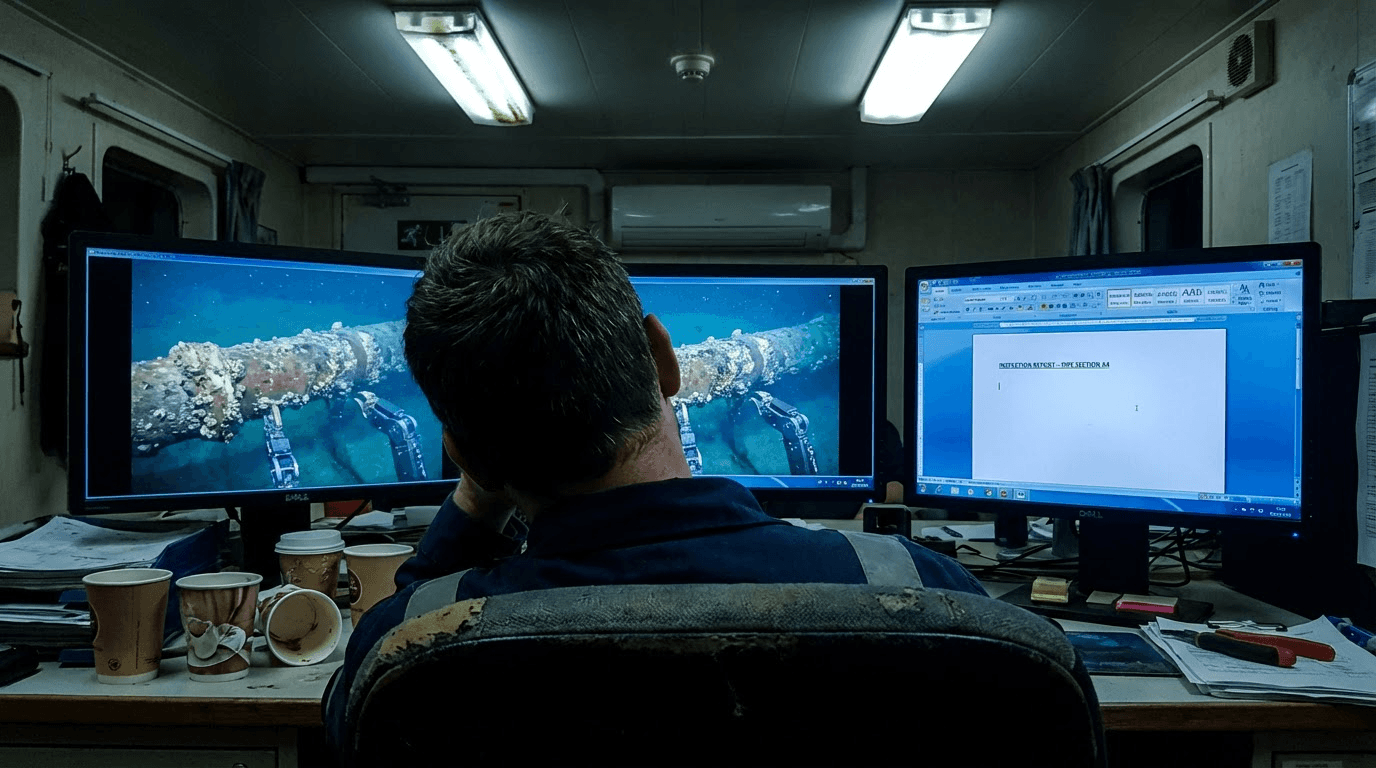
Navy vs Commercial: Why Military Inspection Standards Will Drive Civilian Innovation
Analysis of how DoD/Navy underwater inspection requirements (higher precision, security clearance, audit trails) are pushing technology that will eventually benefit commercial markets.
6 min read
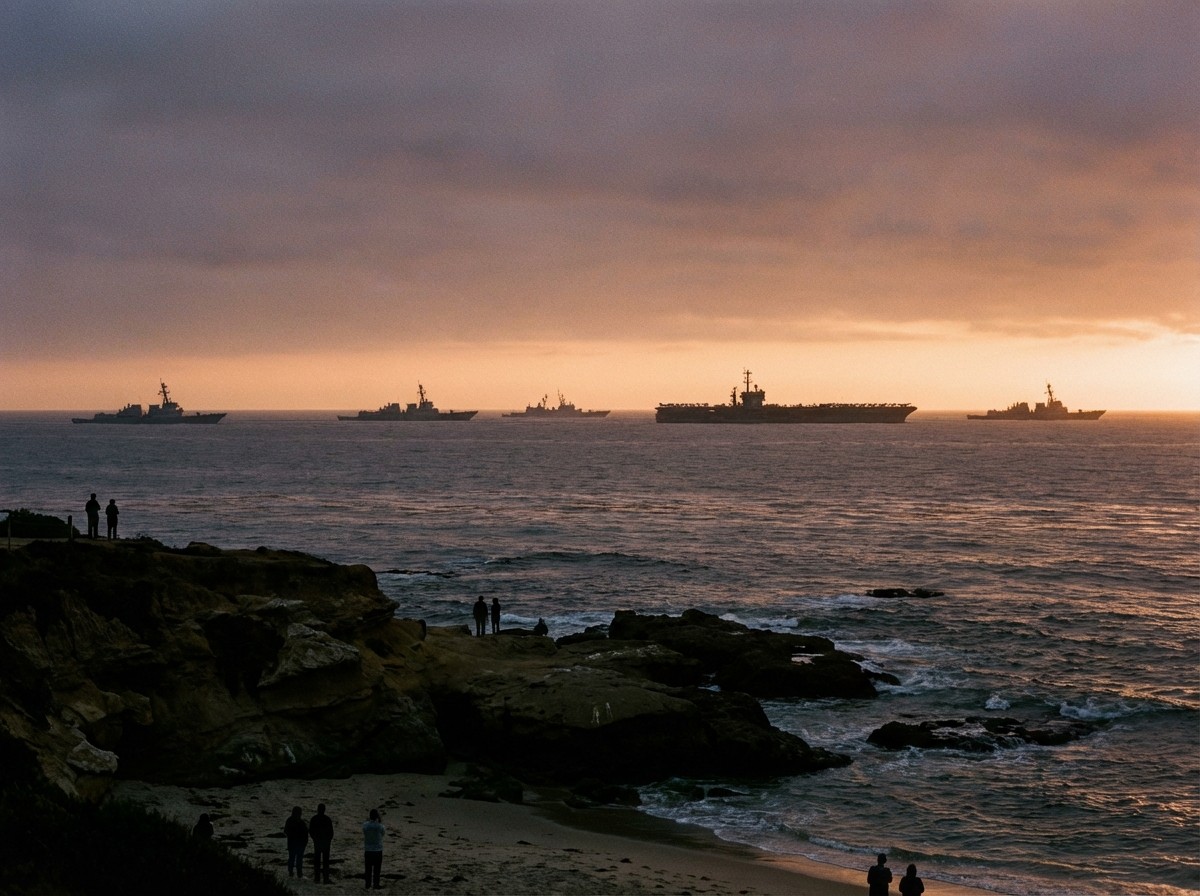
The first time I saw a Navy hull inspection protocol, I was struck by what seemed like bureaucratic overkill. Triple redundancy on data collection. Security clearances for ROV operators. Audit trails that tracked every pixel of every video frame. It felt like regulatory theater designed by people who'd never actually done underwater inspections. I was wrong.
These military standards have become the foundation for the most advanced civilian inspection capabilities in the industry.
The Security-First Paradigm
Military underwater inspection operates from a fundamentally different premise than commercial work. While civilian inspections focus on structural integrity and regulatory compliance, military inspections assume that the inspection process itself is a potential security vulnerability.
The EOD HULS (explosive ordinance disposal hull unmanned underwater vehicle localization systems) programme evolved from a 2002 contract between ONR, Bluefin and the Massachusetts Institute of Technology (MIT) to develop autonomous underwater inspection capabilities. This wasn't just about finding hull damage—it was about detecting potential threats attached to naval vessels.
This security-first approach drives technical requirements that seem excessive for civilian applications but create capabilities that commercial operators are now desperate to access.
Threat Detection vs. Defect Detection
Naval inspection systems must distinguish between legitimate hull features, structural defects, and potential security threats. A civilian ROV operator looks for cracks, corrosion, and wear patterns. A military system must also identify:
Unauthorized attachments or modifications
Foreign objects that could be monitoring devices
Magnetic anomalies indicating concealed metallic objects
Unusual acoustic signatures suggesting electronic devices
The technical requirements for this level of discrimination have driven advances in sensor fusion, AI pattern recognition, and autonomous navigation that far exceed civilian inspection needs.
The Autonomous Revolution
Military operations drove this autonomous capability out of operational necessity, not technological curiosity. Naval vessels operate in environments where:
Surface support vessels cannot safely remain stationary
Human divers face unacceptable security risks
Traditional tethered ROVs create operational signatures that compromise mission security
The resulting autonomous inspection systems developed for military applications represent a quantum leap beyond civilian capabilities. While commercial ROVs still require constant human oversight and surface support, military AUVs can conduct comprehensive hull surveys completely independently.
Security Clearance and the Technology Transfer Gap
The defense industry's security clearance requirements create an unusual dynamic in technology transfer. Many of the most advanced underwater inspection capabilities are developed by cleared personnel working on classified projects, but the commercial marine industry struggles to access these innovations.
The Cleared Contractor Ecosystem
Defense contractors developing underwater inspection systems must maintain facility security clearances and employ cleared personnel. This creates a specialized ecosystem of companies that can work on military projects but often cannot freely share their innovations with civilian partners.
The result is a technology gap where military inspection capabilities advance rapidly while civilian systems lag behind by 5-10 years, limited not by technical feasibility but by security restrictions on technology transfer.
Export Controls and ITAR
International Traffic in Arms Regulations (ITAR) classify many advanced underwater inspection technologies as defense articles, restricting their export and limiting commercial development partnerships. An AI algorithm developed for detecting threats on military hulls cannot be freely shared with civilian inspection companies, even when the underlying computer vision techniques have obvious commercial applications.
This regulatory framework inadvertently protects military technological advantages while slowing civilian innovation in underwater inspection.
Data Security and Audit Requirements
Military inspection generates massive amounts of sensitive data that must be protected throughout the collection, processing, and storage lifecycle. These security requirements have driven innovations in encrypted data transmission, secure processing environments, and tamper-evident storage systems that exceed anything available in the commercial sector.
Real-Time Encryption
Naval inspection systems encrypt sensor data in real-time during collection, ensuring that sensitive information about hull configuration, defensive systems, and operational capabilities cannot be intercepted or compromised. This capability requires specialized hardware and software integration that commercial systems are only beginning to adopt.
Chain of Custody Documentation
Military audit requirements demand complete documentation of who accessed inspection data, when, and for what purpose. Every analysis operation must be logged, every data transfer recorded, and every storage location verified. These requirements have driven development of blockchain-based data provenance systems and immutable audit trails that guarantee data integrity.
Commercial inspection operations are beginning to recognize the value of these capabilities as asset owners demand greater accountability and transparency in inspection processes.
The Technology Transfer Success Stories
Despite security restrictions, military inspection innovations eventually migrate to civilian applications through several pathways:
Declassified Research
Research conducted for military applications eventually becomes declassified and available for commercial development. The computer vision algorithms developed for threat detection find new applications in structural defect classification. The autonomous navigation systems designed for covert operations enable civilian AUVs to operate in challenging offshore environments.
Dual-Use Technology Development
Defense contractors increasingly develop technologies that can serve both military and civilian markets. Advanced sensor packages, AI processing systems, and autonomous platforms are designed from the beginning to meet both security requirements and commercial needs.
Veteran-Founded Companies
Military personnel with underwater inspection experience often launch civilian companies that apply military-grade standards to commercial operations. These veteran-founded firms serve as bridges between defense innovation and civilian implementation.
Current Military-to-Civilian Transfers
Autonomous Navigation Systems
The autonomous navigation capabilities developed for military hull inspection are now being adapted for civilian offshore wind farm inspections. The offshore wind market could account for 28% of total observation ROV demand by 2028, up from just 12% in 2024, creating a massive market for autonomous inspection technologies.
Military-grade navigation systems that can operate without GPS, maintain position in strong currents, and navigate complex underwater structures provide significant advantages for offshore wind applications where traditional ROV operations face operational challenges.
Advanced Sensor Integration
Military inspection systems integrate multiple sensor types—sonar, cameras, magnetometers, acoustic sensors—into unified data collection platforms. This sensor fusion approach is now being adopted for civilian applications where comprehensive structural assessment requires multiple data streams.
Commercial inspection contractors are discovering that military-style sensor integration provides more reliable defect detection and better documentation quality than single-sensor approaches.
AI-Powered Pattern Recognition
The threat detection algorithms developed for military applications excel at identifying anomalies and unusual patterns in complex datasets. These same capabilities prove highly effective for civilian structural inspection where the challenge is distinguishing between normal wear patterns and potentially significant defects.
The Standards Migration Effect
Military inspection standards inevitably influence civilian practices as personnel move between sectors and technologies transfer from defense to commercial applications. The rigorous documentation, quality control, and verification procedures developed for military use become best practices that civilian operations adopt to improve their own capabilities.
ISO and Commercial Standards Evolution
International standards organizations study military practices when developing civilian inspection standards. The systematic approaches, documented procedures, and performance requirements that define military inspection become templates for commercial standards development.
Insurance and Liability Drivers
Commercial asset owners face increasing liability exposure for structural failures and environmental incidents. Military-grade inspection standards provide a defensible level of due diligence that can reduce liability exposure and insurance costs, creating economic incentives for adopting military-derived practices.
The Next Wave of Innovation
Current military research programs will drive the next generation of civilian inspection capabilities:
AI-Powered Predictive Analysis
Military systems don't just detect current problems—they predict future failures based on subtle patterns in structural data. These predictive capabilities will transform civilian inspection from reactive defect detection to proactive maintenance planning.
Swarm Inspection Systems
Military research into coordinated autonomous systems will enable swarm-based inspection where multiple AUVs work together to survey large structures. A single offshore platform could be inspected by a coordinated fleet of specialized vehicles, each optimized for specific inspection tasks.
Real-Time Structural Modeling
Military applications require real-time assessment of how damage affects operational capabilities. The 3D modeling and structural analysis systems developed for these applications will enable civilian inspectors to provide immediate assessments of how detected defects impact structural integrity.
Challenges and Obstacles
Technology Transfer Restrictions
Despite the potential benefits, security restrictions continue to limit technology transfer from military to civilian applications. The most advanced inspection capabilities remain classified or export-controlled, slowing civilian innovation.
Cost and Complexity Barriers
Military-grade inspection systems are designed to meet performance requirements regardless of cost. Adapting these systems for cost-sensitive commercial markets requires significant engineering effort to maintain capability while achieving economic viability.
Cultural and Operational Differences
Military and civilian inspection operations have fundamentally different risk tolerances, decision-making processes, and operational constraints. Successfully transferring military innovations requires adaptation to civilian organizational cultures and business models.
Industry Transformation Timeline
Near-Term (2025-2027): Selective Adoption
Civilian inspection companies will selectively adopt military-derived technologies where the performance advantages justify the additional complexity and cost. Early adopters will focus on high-value applications where superior capabilities command premium pricing.
Medium-Term (2027-2030): Mainstream Integration
As military technologies mature and costs decrease, they will become mainstream solutions for civilian inspection applications. The competitive advantages of autonomous operation, advanced sensor integration, and AI-powered analysis will drive broad industry adoption.
Long-Term (2030+): New Industry Standards
Military-derived capabilities will become standard requirements for civilian inspection operations. The enhanced documentation, audit trails, and quality assurance procedures developed for military use will define industry best practices.
Strategic Implications
For Defense Contractors
Companies developing military inspection systems should consider dual-use applications from the beginning of the development process. Designing systems that can serve both military and civilian markets maximizes return on research investment and accelerates technology commercialization.
For Civilian Inspection Companies
Organizations that proactively adopt military-grade standards and technologies will gain competitive advantages as these approaches become industry expectations. Early investment in advanced capabilities positions companies for leadership as the market evolves.
For Asset Owners
The enhanced capabilities derived from military inspection technologies provide opportunities for better risk management, improved operational efficiency, and reduced liability exposure. Asset owners should evaluate inspection contractors based on their ability to deliver military-grade quality and documentation.
The Innovation Cycle Acceleration
Military investment in underwater inspection research continues to accelerate as naval operations become more complex and security threats evolve. This sustained investment creates a continuous pipeline of innovations that will eventually benefit civilian applications.
The key insight is that military requirements drive technical capabilities that exceed current civilian needs, but civilian markets eventually evolve to demand these enhanced capabilities. Asset owners facing increasing regulatory scrutiny, insurance requirements, and operational complexity will find that military-grade inspection standards become not just advantageous but necessary.
The companies that understand this technology transfer pipeline and position themselves to capitalize on military innovations will dominate the next decade of civilian underwater inspection. Those that continue operating with current-generation commercial standards will find themselves increasingly obsolete as military-derived capabilities become market requirements.
The transformation has already begun. Military standards aren't just influencing civilian inspection—they're defining its future. The question isn't whether civilian operators will adopt military-grade capabilities, but how quickly they can access and implement them.
Swim with us
The latest in AI and marine surveying. Unlock the depths with AI.