The $2.3B Inspection Inefficiency
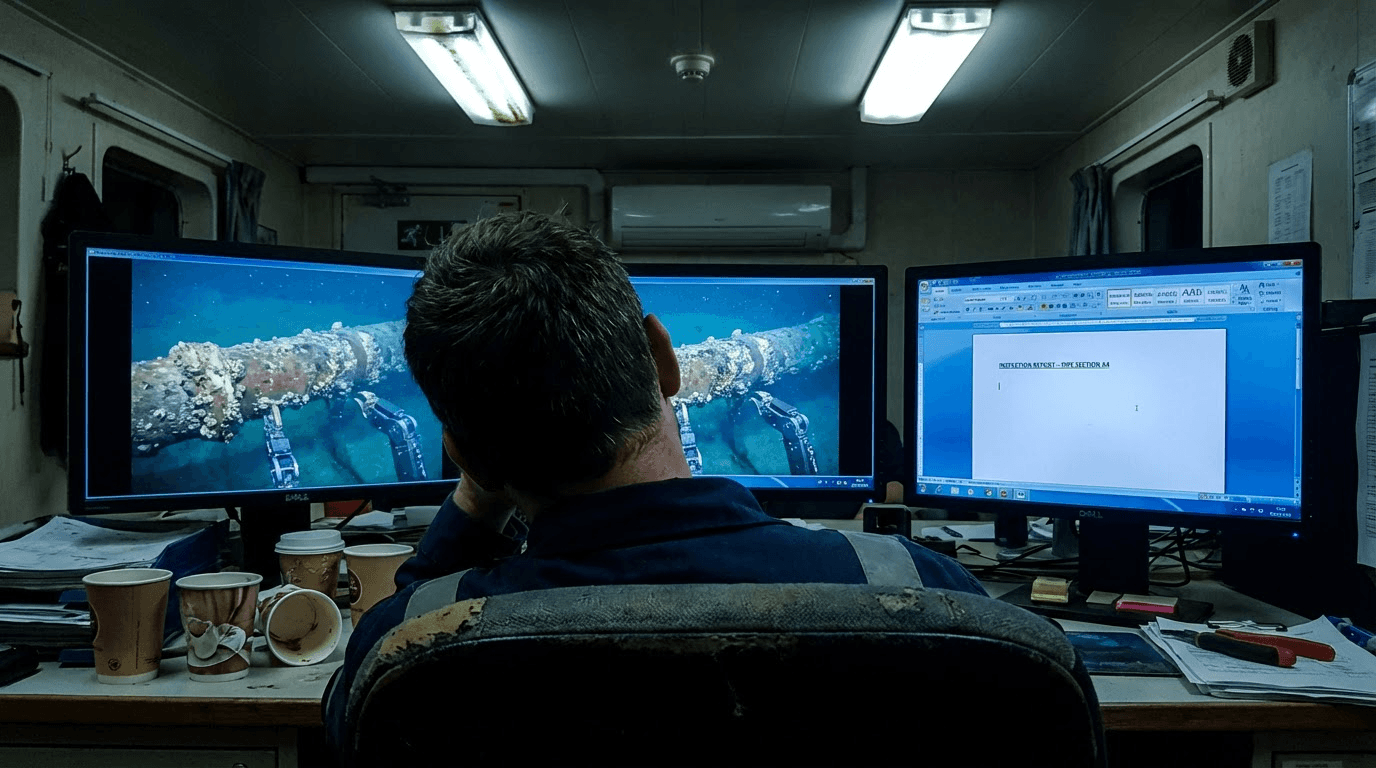
When Beam ceased operations in May 2025, just eight months after the merger of underwater inspection leaders Rovco and Vaarst, it wasn't just another startup failure. It was a stark illustration of the systemic inefficiencies plaguing the underwater inspection industry.
6 min read
When Beam ceased operations in May 2025, just eight months after the merger of underwater inspection leaders Rovco and Vaarst, it wasn't just another startup failure. It was a stark illustration of the systemic inefficiencies plaguing the underwater inspection industry.
The Rise and Fall of a Market Leader
Beam was formed in September 2024 through the merger of UK-based offshore wind solutions providers Rovco and Vaarst. The company "gained rapid recognition for its autonomous subsea systems and AI-powered technologies" before ceasing operations in May 2025.
The numbers tell the brutal story: Beam went into administration after a failed funding round, laying off 162 of its 195 staff. That's an 83% workforce reduction—not a scaling back, but a complete collapse.
The company made more than 100 staff redundant and ceased operations just months after rebranding from Rovco, shocking an industry that had viewed the merger as a consolidation play designed to achieve economies of scale.
But having worked in this industry for over a decade, I wasn't surprised. The Beam collapse reveals fundamental problems with ROV utilization economics that go far beyond any single company's execution.
The Utilization Paradox
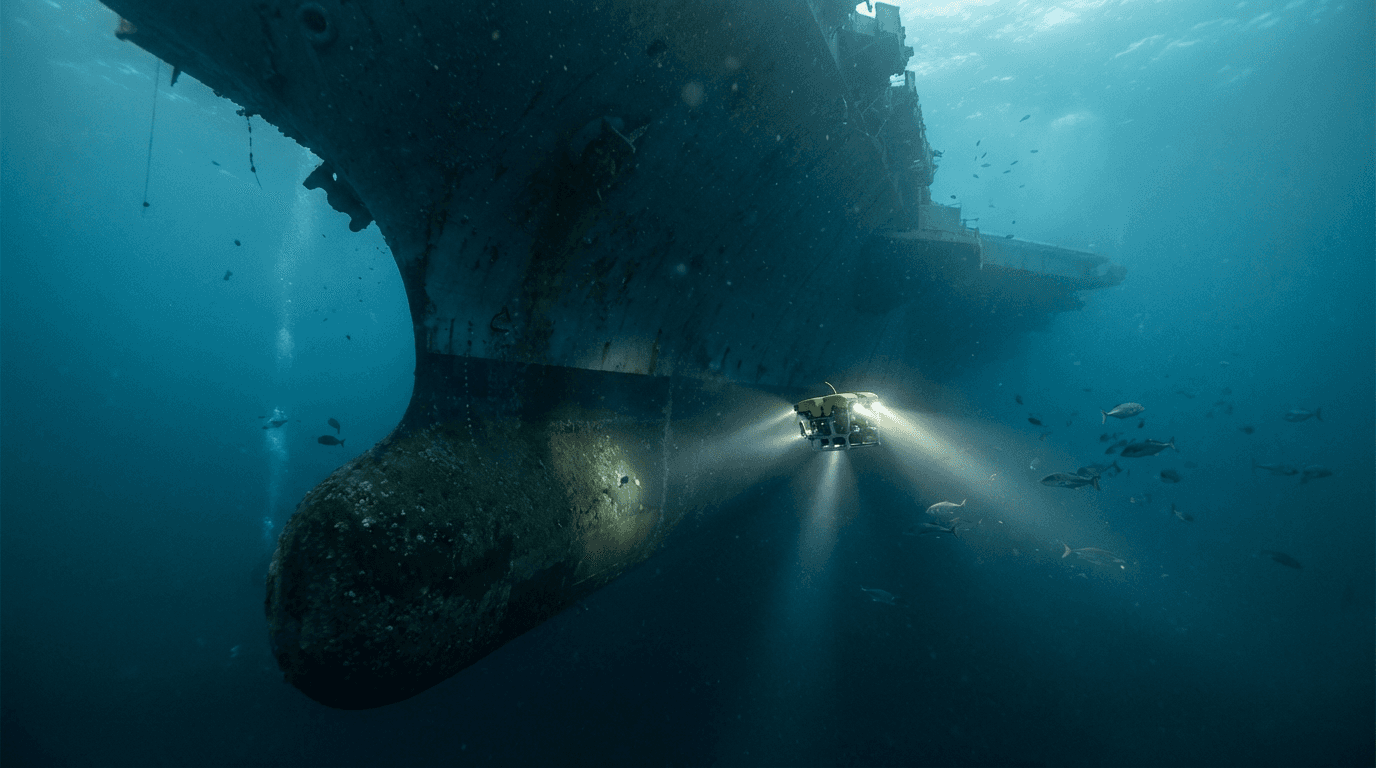
The core issue isn't technology—it's utilization. ROVs provide safer alternatives to human divers for tasks such as inspection of underwater structures, pipelines, and offshore installations, but the economics only work when these expensive assets are continuously deployed.
Here's the reality: A work-class ROV system can cost $2-5 million, requires a specialized support vessel at $50,000-100,000 per day, and needs a crew of 8-12 technicians. Yet industry utilization rates hover around 60-70%—meaning these assets sit idle 30-40% of the time while still requiring maintenance, insurance, and crew standby costs.
Beam's business model was built on the promise of AI-powered efficiency gains. The merger focused on "the data side of the business and aimed to tap into the AI boom", but AI doesn't solve utilization problems—it just processes data more efficiently from underutilized assets.
Market Structure Problems
The Feast-or-Famine Cycle
Major oil and gas companies routinely deal out multiple contracts for ROVs and AUV services in the Gulf of Mexico, but these contracts follow predictable seasonal patterns that leave equipment idle during weather windows and maintenance periods.
I've seen contractors scramble to redeploy ROVs from the North Sea to the Gulf of Mexico to chase work, spending more on mobilization costs than they earn on the actual inspection work. The industry's geographic fragmentation means that even successful companies struggle with utilization optimization.
Contract Structure Inefficiencies
The traditional day-rate model rewards equipment availability, not productivity. A contractor billing $75,000/day for a ROV system has no economic incentive to complete inspections quickly or efficiently. In fact, the incentive structure encourages slow, methodical work that maximizes billable days.
Beam tried to disrupt this with outcome-based pricing, but asset owners weren't ready to move away from familiar day-rate structures. The result was a company caught between traditional pricing expectations and modern efficiency capabilities.
The Technology Investment Trap
Chasing the AI Premium
Beam invested heavily in these next-generation capabilities, but the market wasn't willing to pay premium rates for AI-enhanced inspections. Asset owners viewed AI as a cost-reduction tool, not a value-add service worthy of higher rates.
The company found itself in the classic tech startup trap: high development costs for capabilities that customers expected at commodity pricing.
Equipment Standardization Challenges
The offshore wind market could account for 28% of total observation ROV demand by 2028, up from just 12% in 2024, but this growth requires different equipment configurations than oil and gas work.
Beam's strategy involved developing specialized equipment for offshore wind applications, but the market timing was off. Wind farm developers are still focused on cost reduction rather than inspection optimization, meaning the premium for specialized equipment hasn't materialized.
The Swiss Acquisition: What It Reveals
In July 2025, Rosenxt acquired the defunct Beam assets, highlighting what went wrong with the original business model. The Swiss technology group paid pennies on the dollar for capabilities that had required tens of millions in development investment.
This fire-sale acquisition reveals a key insight: the technology was valuable, but the business model was flawed. Rosenxt likely acquired Beam's IP and key personnel for integration into a larger, more diversified operation with better utilization economics.
Industry-Wide Implications
The Consolidation Imperative
Beam's failure accelerates industry consolidation. Growing competition among global subsea service providers often leads to price pressures, affecting profit margins, making it impossible for smaller players to achieve sustainable utilization rates.
The companies that survive will be those with:
Geographic diversification to optimize equipment deployment
Mixed service portfolios that smooth seasonal demand variations
Scale economics that can absorb technology development costs
The Utilization Solution
The industry needs fundamental changes to improve ROV utilization:
Asset Sharing Networks: Instead of each contractor owning idle equipment, the industry needs collaborative models where ROVs can be shared across multiple operators based on demand patterns.
Predictive Deployment: AI should be used not just for inspection analysis, but for optimizing equipment deployment across global markets to maximize utilization.
Outcome-Based Pricing: Moving from day rates to performance-based contracts would align contractor incentives with operational efficiency rather than equipment availability.
What Beam Got Right (And Wrong)
The Right Vision
Beam correctly identified that the inspection industry needed AI-powered automation. Manufacturers are responding with hybrid observation systems that combine traditional inspection capabilities with new functionalities like underwater LiDAR scanning for precise seabed mapping.
The company's autonomous inspection capabilities were technically impressive and represented the future direction of the industry.
The Wrong Business Model
But technology capabilities don't automatically translate into viable business models. Beam's mistake was assuming that better technology would command premium pricing in a commoditized market.
The company also underestimated the capital requirements for achieving sustainable utilization rates. Without the scale to keep equipment continuously deployed, even the most advanced ROV systems become expensive paperweights.
The Market Reality Check
According to recent analysis, major industry players include Bureau Veritas Marine & Offshore, DNV GL, Lloyd's Register Group, RINA Group, and others who are pivotal in driving market innovation. These established players have the scale, diversification, and established customer relationships that startups like Beam struggled to compete against.
The market rewards operational excellence over technological innovation. A well-utilized fleet of older ROVs will outperform an underutilized fleet of cutting-edge autonomous systems every time.
Lessons for the Industry
For Technology Developers
Don't build solutions looking for problems. The underwater inspection industry's challenges are primarily economic, not technical. Focus on innovations that directly address utilization, cost reduction, or operational efficiency rather than adding sophisticated capabilities that customers won't pay for.
For Asset Owners
The Beam collapse should prompt reflection on procurement practices. Day-rate contracting models that seemed safe and predictable are actually contributing to industry inefficiencies that ultimately increase costs.
Consider outcome-based contracting that rewards efficiency and innovation rather than penalizing it.
For Service Providers
The days of competing on technology differentiation alone are ending. Sustainable competitive advantage comes from:
Utilization optimization across global markets
Operational excellence in project execution
Long-term customer relationships built on reliability
The Future of Underwater Inspection
Beam's failure doesn't invalidate the vision of AI-powered autonomous inspection—it validates the importance of sustainable business models. The company's assets living on within Rosenxt's larger operation may ultimately achieve the impact that Beam couldn't as a standalone entity.
The underwater inspection industry needs technological advancement, but it needs business model innovation even more. The companies that figure out how to marry cutting-edge capabilities with sustainable utilization economics will dominate the next decade.
The 162 jobs lost at Beam represent more than a corporate failure—they're a wake-up call for an industry that needs to solve its fundamental economic challenges before it can realize its technological potential.
Swim with us
The latest in AI and marine surveying. Unlock the depths with AI.