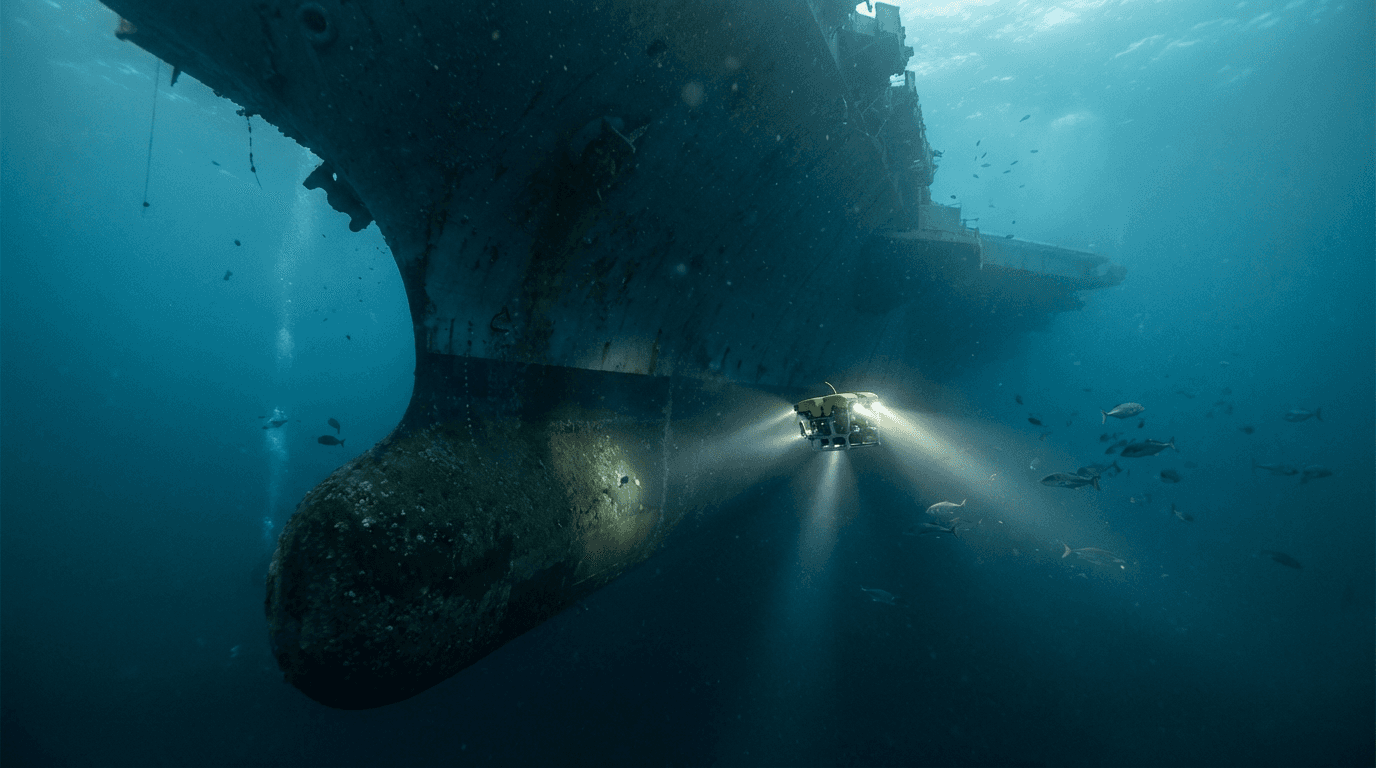
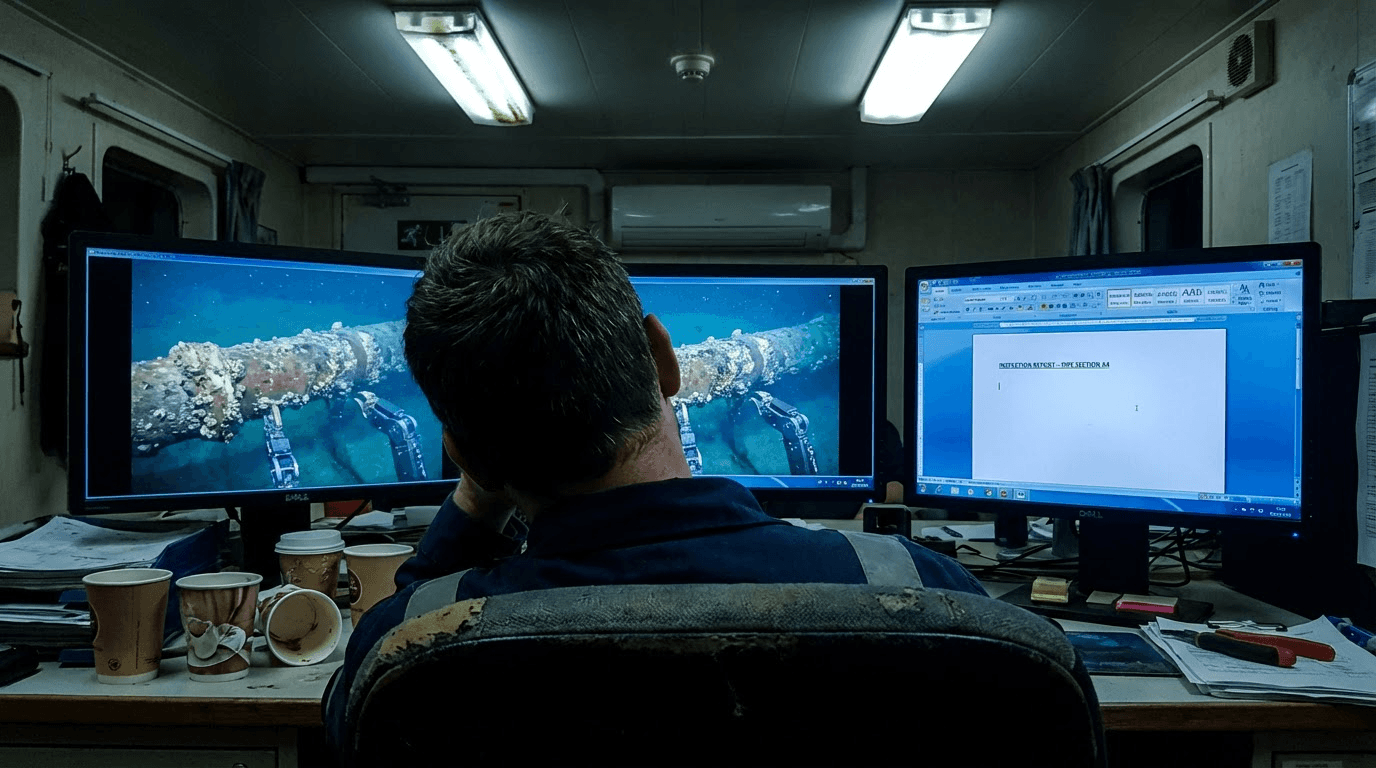
The Inspection Contractor's Paradox: Why Selling More Surveys Means Lower Profits
Data-driven analysis of inspection economics - how traditional contractors are trapped in a cost-plus model while asset owners demand faster, cheaper surveys. Solutions for breaking the cycle.
6 min read
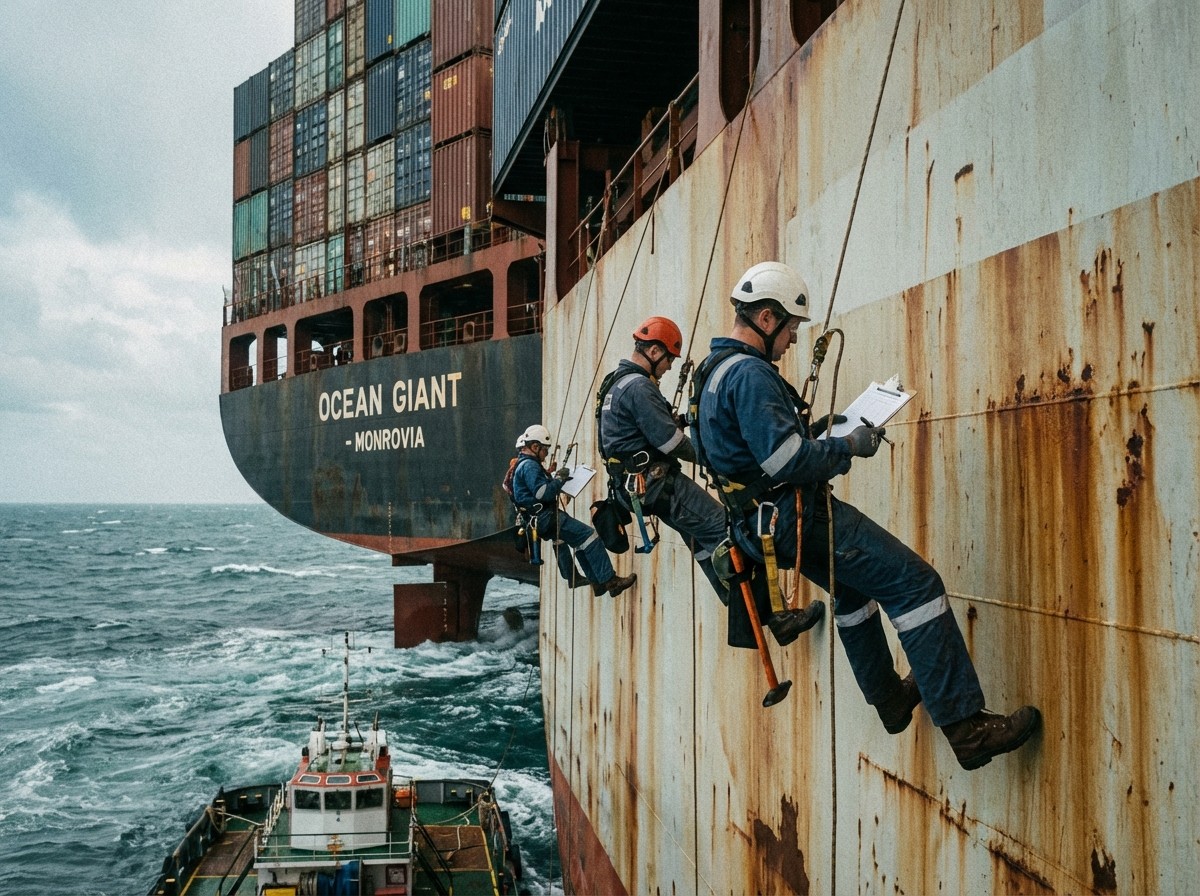
Three months ago, I watched a successful ROV contractor celebrate landing the largest inspection contract in their company's history—a multi-year deal with a major oil operator covering 47 offshore platforms. Six weeks later, the same contractor was laying off staff and selling equipment. The contract that was supposed to secure their future had pushed them toward bankruptcy. This is the inspection contractor's paradox: the more surveys you sell, the less money you make.
The Traditional Economics Don't Work
The underwater inspection industry operates on fundamentally broken economic models that reward inefficiency and punish innovation. Growing competition among subsea service providers often leads to price pressures, affecting profit margins, but the problems run deeper than simple commodity pricing.
The Day-Rate Trap
Most inspection contracts use day-rate pricing structures inherited from the oil and gas industry's traditional service model. A typical work-class ROV system bills at $75,000-150,000 per day, depending on capabilities and market conditions. On the surface, this seems profitable—until you examine the actual economics.
Fixed Costs (Per Day):
Equipment depreciation and maintenance: $15,000-25,000
Vessel charter and crew: $40,000-60,000
Insurance and regulatory compliance: $5,000-10,000
Mobilization and logistics: $8,000-15,000
Variable Costs:
Fuel and consumables: $3,000-8,000
Equipment repairs and replacement: $2,000-12,000
Standby time due to weather or operational delays: 20-40% of available time
The reality: gross margins on inspection contracts typically run 15-25%, but this doesn't account for the utilization problem that kills profitability.
The Utilization Trap
ROVs provide safer alternatives to human divers for tasks such as inspection of underwater structures, pipelines, and offshore installations, but these expensive assets generate revenue only when deployed. Industry utilization rates average 60-70%, meaning ROV systems sit idle 30-40% of the time while still incurring depreciation, maintenance, and crew costs.
The Geographic Problem
Inspection demand is geographically clustered but temporally dispersed. The Gulf of Mexico sees heavy inspection activity during specific weather windows. The North Sea has different seasonal patterns. Offshore wind farms require inspections during construction phases that don't align with oil and gas maintenance cycles.
I've seen contractors spend $200,000 mobilizing equipment from Norway to Trinidad, only to have the project delayed by weather, resulting in standby costs that eliminated all profit margins. The day-rate model charges for productive time but doesn't adequately compensate for mobilization costs and schedule uncertainties.
The Specialization Penalty
Modern offshore facilities require specialized inspection capabilities:
Offshore wind farms: Require specific sensor packages and analysis software
FPSO vessels: Need maritime classification society approval and specialized access systems
Subsea pipelines: Demand burial assessment capabilities and cathodic protection testing
Platform structures: Require confined space entry capabilities and structural analysis expertise
The paradox: specialization improves inspection quality and reduces operational risks, but specialized equipment generates lower utilization rates than general-purpose systems. A contractor with a highly specialized wind farm inspection ROV may achieve premium day rates when working, but the specialized nature of the equipment limits deployment opportunities.
The Scale Economics Illusion
Larger contractors appear to have scale advantages through:
Fleet diversification across multiple geographic markets
Equipment standardization that reduces maintenance complexity
Operational efficiency from experienced crews and established procedures
But scale also creates problems that often outweigh these advantages:
The Overhead Burden
One major industry player reported USD 852.0 million revenue in 2024 with improved EBITDA, but larger operations carry proportionally higher overhead costs:
Corporate management and administration
Multiple facility leases and maintenance
Complex regulatory compliance across jurisdictions
Technology development and R&D investment
I've analyzed financial statements from several major inspection contractors and found that operational efficiency gains from scale are often offset by administrative overhead expansion.
The Customer Concentration Risk
Large inspection contracts that seem like business stabilizers often create dangerous customer concentration risks. When 40-60% of revenue comes from a single client or project, any contract modification, delay, or cancellation can devastate cash flow.
The contractor celebrating their largest-ever contract discovered this when the client delayed the project start by six months, forcing them to maintain standby crews and equipment without generating revenue to cover fixed costs.
The Technology Investment Problem
The Innovation Penalty
Advanced inspection technologies should improve efficiency and reduce costs, but they often have the opposite effect on contractor profitability:
AI-Powered Defect Detection: Reduces analysis time but requires software licensing, specialized training, and more expensive data processing hardware. Clients expect the time savings to translate to lower day rates rather than improved margins.
Autonomous Underwater Vehicles: AUVs can operate independently without direct human control, making them ideal for surveying expansive areas efficiently and cost-effectively. But AUV systems cost $1-3 million each, require specialized launch and recovery equipment, and need highly trained operators. The operational efficiency doesn't compensate for the increased capital and training costs under current pricing models.
The Client Expectation Problem
Asset owners view technological improvements as cost reduction opportunities rather than service enhancements worthy of premium pricing. When a contractor reduces inspection time from 10 days to 6 days through better technology, clients expect proportional cost reductions rather than paying premiums for superior capabilities.
This creates a perverse incentive where contractors avoid efficiency improvements that would reduce billable hours under day-rate contracts.
The Cost-Plus vs. Fixed-Price Dilemma
Cost-Plus: The Comfortable Trap
Cost-plus contracts guarantee cost recovery plus a predetermined profit margin, removing most financial risk from inspection operations. These contracts seem ideal for contractors, but they create long-term competitive problems:
Reduced efficiency incentives: No motivation to improve operational performance
Technology stagnation: Limited pressure to invest in advanced capabilities
Client dissatisfaction: Asset owners recognize they're paying for inefficiency
Market vulnerability: Contractors become dependent on specific client relationships
Fixed-Price: The Innovation Imperative
Fixed-price contracts transfer risk to contractors but create strong incentives for operational efficiency and technological advancement. Contractors can retain savings from improved performance, but they also absorb costs from delays, equipment failures, or scope changes.
The problem: most contractors lack the financial reserves to absorb the risks associated with fixed-price contracting, particularly for complex multi-month inspection campaigns.
The Market Structure Problem
Procurement Practices
Asset owners typically select inspection contractors through competitive bidding processes that prioritize cost over capability or long-term value. This procurement approach:
Commoditizes inspection services: Treats all contractors as interchangeable providers of standardized services
Ignores lifecycle costs: Focuses on initial contract value rather than total cost of ownership
Penalizes innovation: Advanced capabilities that don't translate to immediate cost savings provide no competitive advantage
Rewards lowest bidders: Creates pressure to cut costs that often compromises service quality
The Service Company Squeeze
Major oil and gas operators increasingly rely on integrated service companies like Schlumberger, Halliburton, and TechnipFMC for offshore services. These companies often subcontract inspection work to specialized ROV contractors but retain pricing control and client relationships.
This creates a squeeze where inspection contractors face:
Reduced pricing power: Service companies negotiate day rates based on their own margin requirements
Limited client access: Direct relationships with asset owners become difficult to maintain
Scope restrictions: Opportunities for value-added services are controlled by prime contractors
Payment delays: Subcontractor payment terms often create cash flow challenges
The Financial Reality
Working Capital Requirements
Inspection contractors face significant working capital requirements that aren't obvious from day-rate pricing:
Equipment Investment: $5-15 million for a complete ROV system including support equipment, spares inventory, and specialized tooling.
Mobilization Financing: Contractors often advance mobilization costs that aren't reimbursed until project completion, creating 60-90 day cash flow gaps on major projects.
Equipment Standby: Insurance and maintenance costs continue during idle periods between projects, requiring sufficient cash reserves to bridge utilization gaps.
The Debt Service Problem
Most ROV equipment is financed through equipment loans or lease arrangements with 5-7 year terms. Monthly debt service payments continue regardless of utilization rates, creating fixed cost burdens that can quickly become unsustainable during market downturns.
I've seen profitable contractors forced into bankruptcy not because their operations were losing money, but because utilization gaps created cash flow problems that prevented them from servicing equipment debt.
Case Study: The Wind Farm Opportunity Trap
The offshore wind market represents a massive growth opportunity for inspection contractors. Manufacturers are responding with hybrid observation systems that combine traditional inspection capabilities with new functionalities like underwater LiDAR scanning for precise seabed mapping.
But wind farm inspection economics create new versions of familiar problems:
Construction vs. Operations Economics
Construction Phase: High-intensity inspection requirements during turbine installation create excellent utilization rates and profitable operations.
Operations Phase: Routine maintenance inspections are less frequent and often bundled with other services, reducing standalone profitability.
The trap: contractors invest heavily in wind-specific capabilities during the construction boom but struggle to maintain utilization as markets transition from construction to operations and maintenance.
Geographic Concentration
Offshore wind development is geographically concentrated in specific regions—the North Sea, U.S. East Coast, and emerging Asian markets. This concentration creates:
Intense local competition that drives down day rates
High mobilization costs for contractors based outside primary development areas
Regulatory complexity as different jurisdictions have varying inspection requirements
Market timing risks where delayed projects can leave contractors with underutilized specialized equipment
The Alternative Economic Models
Outcome-Based Contracting
Some progressive contractors are experimenting with outcome-based pricing that charges for completed inspections rather than time-based services. Under these models:
Fixed prices per structure inspected regardless of time required
Quality guarantees with penalties for missed defects or inadequate documentation
Performance bonuses for early completion or superior analysis
Risk sharing where contractors participate in long-term asset performance
The challenge: outcome-based contracting requires sophisticated risk assessment capabilities and sufficient financial reserves to absorb performance risks.
Technology-as-a-Service Models
Advanced contractors are developing service models that emphasize technological capabilities rather than equipment deployment:
Data-as-a-Service: Providing analyzed inspection results rather than raw data collection services, with pricing based on the value of insights provided.
Predictive Analytics: Using historical inspection data to provide predictive maintenance recommendations, with compensation tied to demonstrated asset performance improvements.
Integrated Asset Management: Offering comprehensive inspection, analysis, and maintenance planning services with long-term performance guarantees.
Market Evolution and Survival Strategies
The Consolidation Imperative
The transition towards renewable energies challenges traditional subsea contractors to adapt rapidly or risk losing market share. Industry consolidation is inevitable as smaller contractors lack the financial resources to navigate utilization volatility and technology investment requirements.
Successful consolidation strategies focus on:
Geographic diversification to optimize global equipment utilization
Service integration to capture larger portions of client inspection budgets
Technology standardization to reduce operational complexity and training requirements
Financial strength to weather market downturns and pursue counter-cyclical acquisition opportunities
The Specialization Strategy
Counter-intuitively, some contractors are succeeding through increased specialization rather than diversification:
Deep Technical Expertise: Developing unmatched capabilities in specific inspection applications where expertise commands premium pricing.
Niche Market Leadership: Dominating small but profitable market segments where competition is limited and switching costs are high.
Technology Partnership: Collaborating with equipment manufacturers or software developers to create integrated solutions that are difficult for competitors to replicate.
The Path Forward
The inspection contractor's paradox isn't unsolvable, but it requires fundamental changes to how the industry approaches pricing, technology investment, and client relationships.
For Contractors
Move Beyond Day-Rate Thinking: Develop pricing models that capture value delivered rather than time consumed. This requires sophisticated understanding of client economics and the ability to quantify inspection value.
Invest in Utilization Optimization: Use predictive analytics and market intelligence to optimize equipment deployment across global markets and seasonal patterns.
Build Financial Resilience: Maintain sufficient cash reserves and credit facilities to navigate utilization gaps and pursue counter-cyclical opportunities.
For Asset Owners
Adopt Lifecycle Cost Thinking: Evaluate inspection contractors based on total value delivered rather than lowest initial cost. Consider the costs of missed defects, schedule delays, and operational disruptions.
Support Innovation: Provide opportunities for contractors to demonstrate advanced capabilities and capture value from efficiency improvements.
Improve Procurement Practices: Move toward longer-term partnerships that allow contractors to optimize service delivery rather than focusing solely on competitive bidding for individual projects.
The Industry's Inflection Point
The underwater inspection industry stands at an inflection point where traditional business models are failing, but new opportunities are emerging for contractors that can adapt. The companies that solve the utilization optimization problem while delivering superior technical capabilities will dominate the next decade.
Those that continue operating under day-rate business models with commodity service offerings will find themselves trapped in a cycle where selling more surveys means making less money—until they can't afford to stay in business at all.
The paradox is real, but it's not permanent. The contractors that break free from traditional economic models will create sustainable competitive advantages that transform industry profitability. Those that don't will become cautionary tales about the dangers of competing in markets where winning contracts can be a path to bankruptcy.
Swim with us
The latest in AI and marine surveying. Unlock the depths with AI.